A contract research role evaluating how the United Nations’ videos actually change people’s behaviour and intentions, measured not just by what people say, but by what their bodies and faces reveal.
Highlights
- Analysis of United Nations climate-change communications, with released recommendations.
- Co-led a cross-functional international research team to gather and analyse physiological and quantitative data.
- Ran mixed-methods user research with ~100 participants and owned the quantitative analysis.
- Translated complex behavioural data into clear recommendations for non-technical stakeholders.
The study
Attitudes, Communication Effectiveness, and Behavioral Intentions of Young People on Climate Change
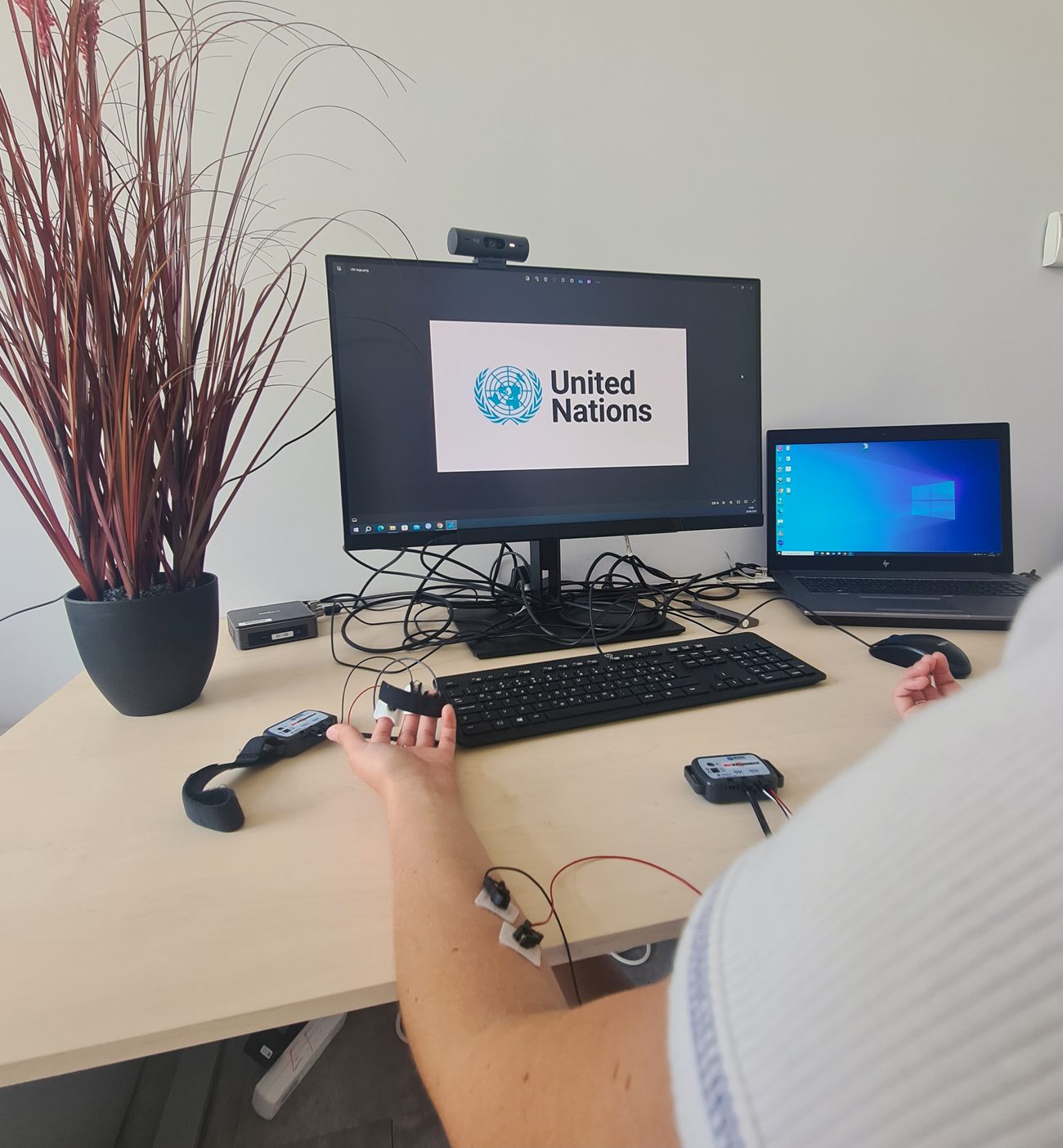
We tested how to move young people from attitude to action on climate change, comparing two kinds of messaging head to head. Written communication was studied with Enginius, and video communication was studied in a behavioural laboratory with BIOPAC and Noldus FaceReader alongside self-report questionnaires. The findings fed directly into recommendations for improving both the written and the video formats.
What I did
- Designed and ran analysis on the effectiveness of UN videos on behaviour and intentions.
- Captured physiological signals with an integrated BIOPAC system, EDA, SCL, SCR, RSP, HR, ECG and PPG.
- Coded emotional facial responses with Noldus FaceReader, triangulated against questionnaires.
- Ran regression, factor, panel, sentiment, valence/emotion and segmentation analysis, plus word clouds.
- Produced evidence-based insight with disciplined validation and causal reasoning.
Skills & tools
- Experimental design
- SPSS
- Enginius
- BIOPAC
- Noldus FaceReader
- Regression
- Segmentation
- Statistics